Monday, November 18, 2013

Charlotte's Web


Charlotte's Web is a children's novel by American author E. B White and illustrated by Garth Williams; it was published in 1952 by Harper & Brothers. The novel tells the story of a pig named Wilbur and his friendship with a barn spider named Charlotte. When Wilbur is in danger of being slaughtered by the farmer, Charlotte writes messages praising Wilbur (such as "Some Pig") in her web in order to persuade the farmer to let him live.

Written in White's dry, low-key manner, Charlotte's Web is considered a classic of children's literature, enjoyable to adults as well as children. The description of the experience of swinging on a rope swing at the farm is an often cited example of rhythm in writing, as the pace of the sentences reflects the motion of the swing. Publishers Weekly listed the book as the best-selling children's paperback of all time as of 2000.


Sunday, November 17, 2013

France


For the past several years, it has been a tradition at Hough Street School to hold a Cultural Event at the end of the school year.  In past years, students have studied the counties of Central and South America and Asia.  This year, each classroom will study and learn about countries in Europe.  This year, our class has decided to study France.  We will present our learning at the Cultural Event at the end of May.  To help us prepare for this event and become experts in both the French language and culture, we've enlisted the help of Madame Rowley.  Madame is the grandmother of a student in our class and an expert in everything French.  Madame was a French teacher for over 28 years and is excited to share her knowledge with our first graders!


Thursday, November 14, 2013

Baby Haradon

Please Welcome the Newest Addition to Our Hough Family

Genevieve Susanne Haradon
11.12.13 at 11:31 PM
9 pounds 4 oz - 21 inches


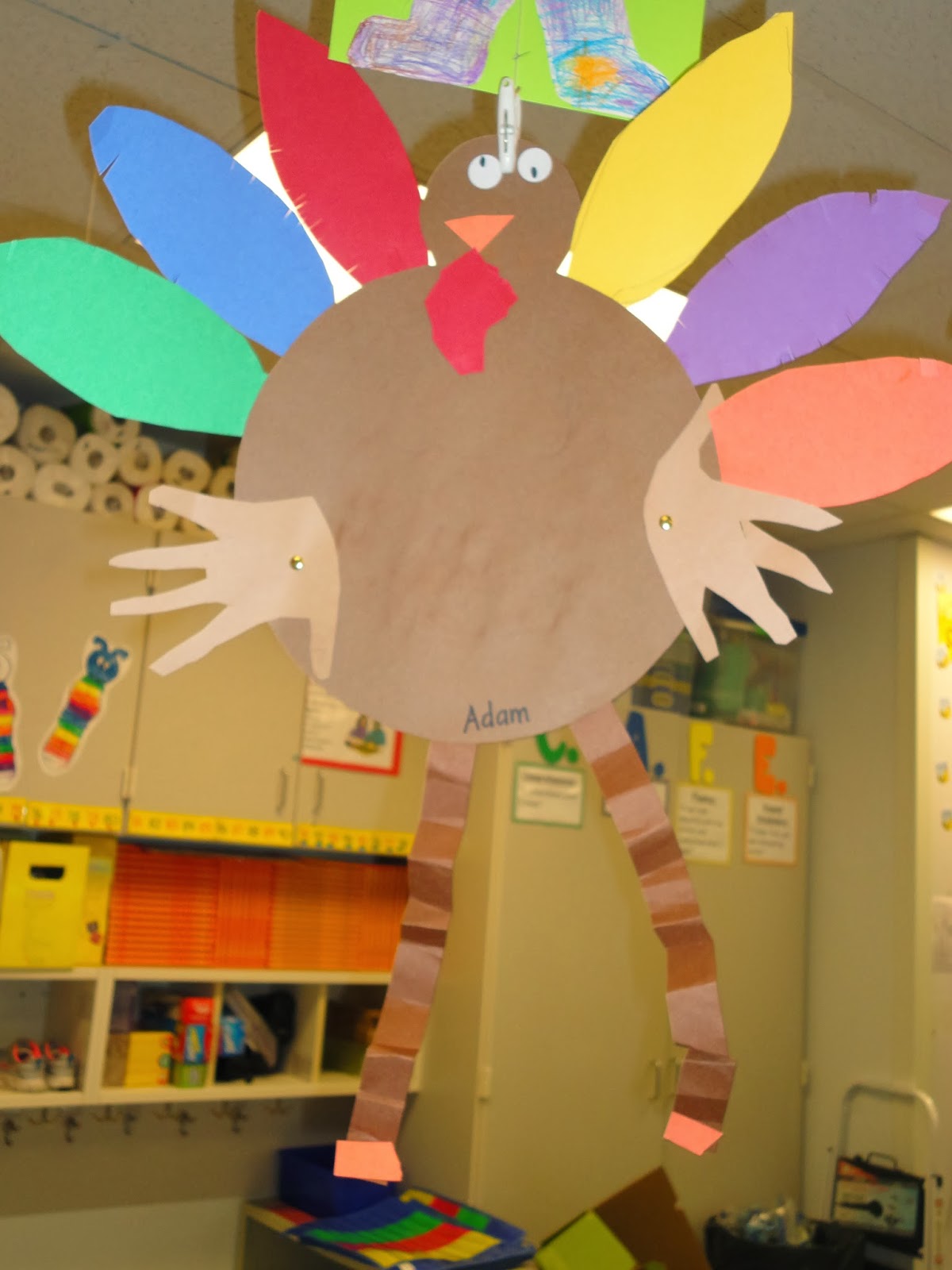
Turkey Talk

The turkey is a funny bird
Its head goes bobble-bobble;
And all he knows is just one word... 
And that is
GOBBLE, GOBBLE!!!


HAPPY THANKSGIVING!!


Tuesday, November 12, 2013

Fact Families


One of the more common concepts taught in first grade math is the concept of a fact family (or fact families). 

A fact family is made up of three numbers. Just as in any family the members, or numbers, are related and there are always at least four math facts to be made with them. 
 
Take, for example, these members of a fact family: 3, 4, and 7.

The Fact Family Relationships
In the family 3, 4, and 7 they are related because you can add two of the numbers to get the last number.
  • 3 + 4 = 7
You can also switch the first two numbers, using the commutative property of addition, and still get the same answer.
  • 4 + 3 = 7
Fact Family Cousins
If addition is the direct relationship amongst these family members, then subtraction is the family cousin through the inverse property. Simply put, subtraction is the opposite of addition, but it's still related.  The problems still only use the three members of the family.
  • 7 - 3 = 4
  • 7 - 4 = 3
Keeping Track of All Family Members
Once your child knows the relationships of the fact family members, it's easy to see who is missing at a quick glance. Solving addition and subtraction problems is then much easier and starts to become automatic. Take for example, this problem:
  • 3 + ____  =  7
Your child should quickly be able to recognize 4 as the missing family member.